SEO for Beginners in 2026: A Complete Guide to Ranking Higher on Google
Introduction
If you’ve ever published a blog post and waited for visitors who never showed up, you’re not alone. Many beginners assume that once a website is live, traffic will automatically follow. In reality, getting noticed online requires a clear strategy—and that’s where SEO comes in.
Search Engine Optimization (SEO) is the process of improving your website so that it appears higher in search engine results, especially on Google. In 2026, SEO is no longer about tricking algorithms with keyword stuffing or shortcuts. It’s about creating valuable content, understanding user intent, and building trust over time.
This guide is designed for complete beginners. Whether you’re a blogger, small business owner, or just starting your online journey, you’ll learn the practical steps needed to rank higher and grow your website traffic.
What is SEO and Why It Matters
SEO stands for Search Engine Optimization. It helps search engines understand your content and decide when to show it to users.
Think of Google as a librarian. When someone searches for something, Google tries to recommend the most helpful and relevant “book” (web page). SEO is how you make your content easy to find and worthy of recommendation.
Why SEO is Important in 2026
- It brings free, long-term traffic
- It builds credibility and trust
- It reduces reliance on paid ads
- It helps you reach the right audience at the right time
Unlike social media posts that fade quickly, a well-optimized article can bring traffic for months or even years.
Understanding How Google Works
Before diving into techniques, it’s important to understand how search engines operate. Google mainly follows three steps:
1. Crawling
Google uses bots to discover new and updated pages across the internet.
2. Indexing
Once a page is discovered, Google stores it in its database.
3. Ranking
When someone searches, Google ranks pages based on relevance, quality, and usefulness.
Your job is to make sure your content is easy to crawl, valuable enough to index, and strong enough to rank.
Keyword Research: The Starting Point
Every SEO strategy begins with keywords. These are the words and phrases people type into search engines.
Choosing the Right Keywords
Beginners often target highly competitive keywords like “SEO” or “marketing.” These are difficult to rank for. Instead, focus on long-tail keywords, which are more specific and easier to rank.
For example:
- Instead of: SEO
- Use: SEO for beginners in 2026
Simple Ways to Find Keywords
- Use Google autocomplete suggestions
- Check the “People also ask” section
- Look at competitor blog topics
- Use free keyword tools
The goal is to find keywords that people are searching for but are not overly competitive.
On-Page SEO: Optimizing Your Content
On-page SEO refers to optimizing the elements within your website.
Title and Headings
Your title is the first thing users see. It should be clear, engaging, and include your main keyword.
Headings (H1, H2, H3) help structure your content and improve readability. They also help search engines understand your content better.
Meta Description
This is the short description that appears in search results. While it doesn’t directly affect rankings, it can improve your click-through rate.
URL Structure
Keep your URLs short and meaningful. Avoid unnecessary numbers or symbols.
Example:
- Good: yoursite.com/seo-beginners-2026
- Bad: yoursite.com/post?id=12345
Image Optimization
Images make your content more engaging, but they should be optimized:
- Use descriptive file names
- Add alt text
- Compress images for faster loading
Creating High-Quality Content
Content is the foundation of SEO. Without useful content, no amount of optimization will help.
What Makes Content Valuable
- It answers a specific question
- It is easy to understand
- It is well-organized
- It provides real insights or solutions
Avoid writing just to fill space. Focus on helping your reader solve a problem.
Write for Humans First
A common mistake is writing only for search engines. Instead, write naturally and prioritize your audience. If your content is helpful, SEO will follow.
Content Length and Depth
Longer content often performs better because it covers topics in detail. However, quality is more important than length. A clear, well-written 1200-word article is better than a poorly written 2000-word one.
Technical SEO Basics
Technical SEO ensures your website functions properly and provides a good user experience.
Website Speed
Users expect fast-loading pages. If your site is slow, visitors will leave quickly. This also affects rankings.
Mobile-Friendliness
Most users browse on mobile devices. Your website should look and work well on all screen sizes.
Secure Website
Having HTTPS (secure connection) is essential. It builds trust and is a ranking factor.
Fix Errors
Broken links, missing pages, or indexing issues can hurt your SEO. Regularly check your website for errors.
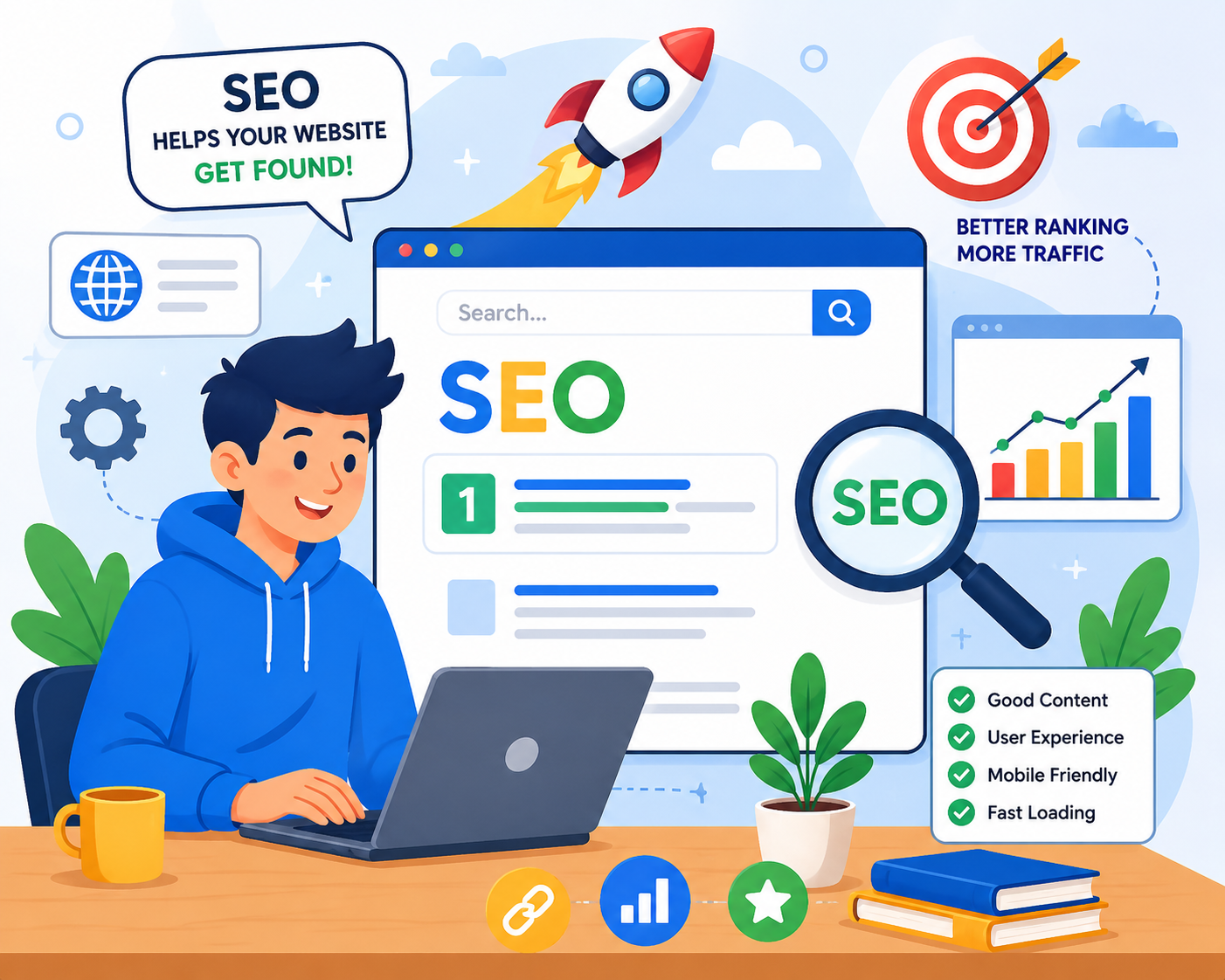
Off-Page SEO: Building Authority
Off-page SEO focuses on building your website’s reputation.
What Are Backlinks?
Backlinks are links from other websites to your content. They act as signals of trust.
How to Build Backlinks
- Write guest posts for other blogs
- Create valuable, shareable content
- Connect with other website owners
- List your website in relevant directories
Avoid buying backlinks or using spammy tactics. These can harm your website in the long run.
User Experience and SEO
Google now pays close attention to how users interact with your website.
Key UX Factors
- Easy navigation
- Clean design
- Readable fonts
- Logical structure
If visitors stay longer and engage with your content, it sends positive signals to search engines.
Tracking Your SEO Progress
SEO is not something you do once and forget. It requires regular monitoring.
What to Track
- Number of visitors
- Keyword rankings
- Bounce rate
- Time spent on page
These metrics help you understand what’s working and what needs improvement.
Common SEO Mistakes Beginners Make
Avoiding mistakes is just as important as applying the right strategies.
- Using too many keywords unnaturally
- Ignoring mobile optimization
- Publishing low-quality or copied content
- Not updating old blog posts
- Expecting quick results
SEO takes time. Consistency matters more than shortcuts.
SEO Trends in 2026
SEO continues to evolve. Staying updated helps you stay ahead.
Key Trends
- Greater use of AI in search results
- Increased importance of user intent
- Voice search optimization
- Focus on trust and credibility
Websites that provide real value and authenticity are more likely to succeed.
Conclusion
SEO in 2026 is about understanding your audience and delivering genuine value. It’s not about tricks or shortcuts—it’s about building a strong foundation over time.
Start with keyword research, create helpful content, optimize your website, and focus on user experience. Results won’t happen overnight, but with patience and consistency, your website will grow.
If you stay committed and keep improving, SEO can become one of the most powerful tools for building long-term online success.
Written by
LinkitFirm Team
Published on
May 9, 2026